Did the Color Blue Exist in Ancient Times and Why It Matters
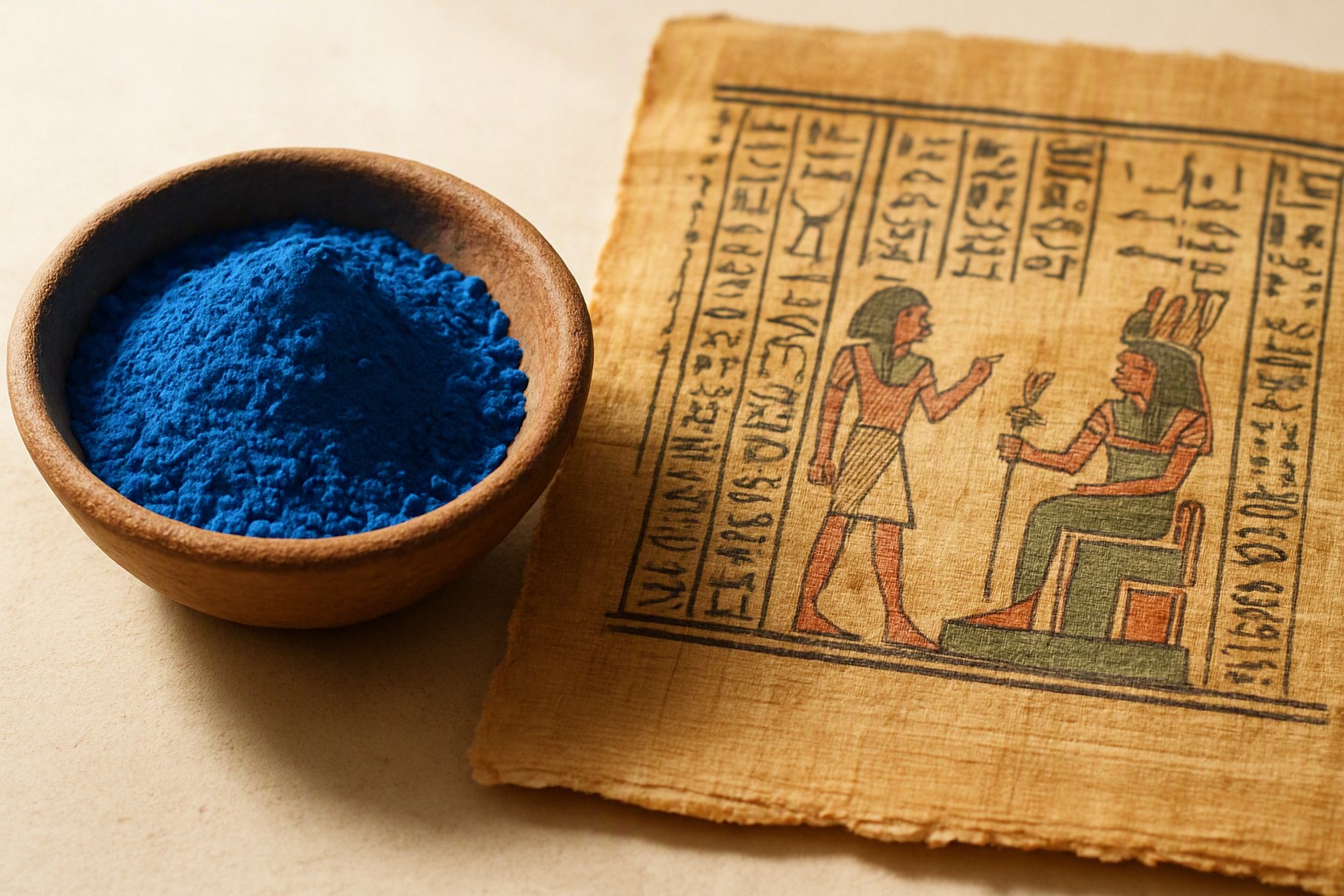
The color blue physically existed in nature long before humans evolved. Ancient languages often lacked a specific word to describe it. They treated shades of blue as variants of green, dark, or light.
red
#e5484d
yellow
#ffd60a
lime
#a3e635
green
#30a46c
turquoise
#40e0d0
blue
#0091ff
indigo
#4f46e5
black
#0a0a0a
Why do ancient languages lack a word for blue?
The puzzle of ancient color terminology began with 19th-century scholarship. British Prime Minister and classical scholar William Gladstone analyzed Homer's epic poetry and noticed peculiar descriptions. Most famously, he found the 'wine-dark sea.' Curious about this anomaly, philologist Lazarus Geiger expanded the research to ancient texts worldwide.
Geiger discovered a universal chronological pattern in how human languages acquire color words:
- Black and white came first
- Followed by red
- Then yellow and green
- Finally blue
While the physical sky and deep water always reflected short wavelengths of light, the linguistic categorization and abstraction of blue developed late across many cultures. Societies prioritized color categories based on utility. For instance, when designing modern data visualizations, developers frequently encounter similar classification constraints, as explored in our guide to accessible geospatial heatmaps. Ancient societies had no industrial need to isolate blue from green or gray until manufacturing techniques demanded precise chemical identification.
How did the ancient Egyptians produce the first artificial blue?
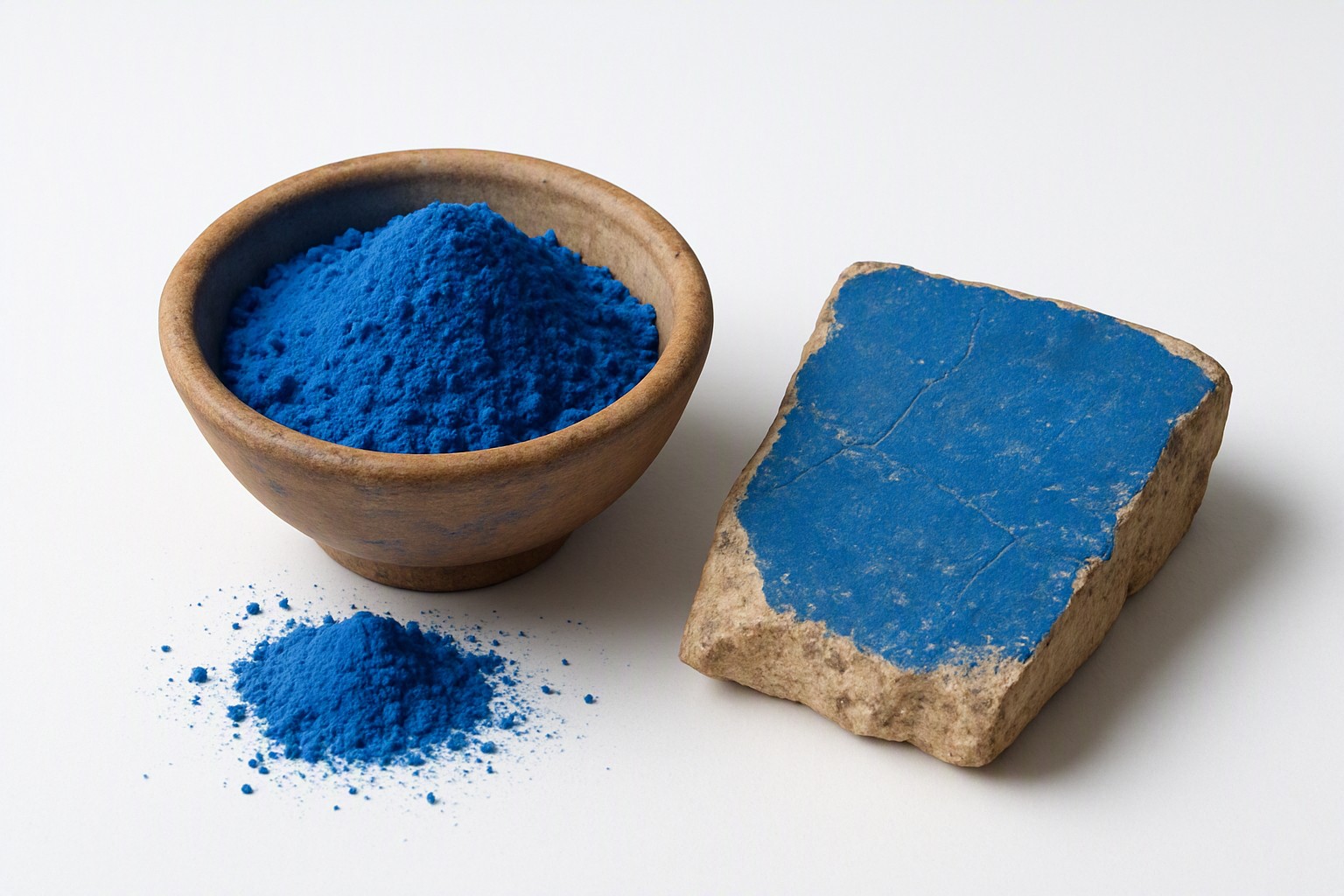
Long before European languages coined a dedicated term for the shade, the Nile Valley civilization mastered advanced materials science. Around 3000 BCE, artisans detailed the invention and chemical composition of Egyptian blue. It became the world's first synthetic pigment.
Created by heating a precise mix of silica sand, lime, copper, and an alkali like plant ash or natron at temperatures between 1,472°F and 1,652°F, the process yielded a calcium copper silicate crystalline compound. This high-tech manufacturing achievement contrasts with the linguistic absence of blue in contemporary texts from other regions.
Egyptian craftsmen crushed this vibrant frit to paint royal tombs, wooden funerary objects, and amulets. Neighboring cultures relied entirely on natural mineral availability. Today, digital creators utilize similar precision tools to extract exact hex codes from visual assets, relying on automated utilities rather than alchemy when executing a quick color lookup from an image.
What did ancient texts call blue instead?
Without a standalone lexicon entry, ancient writers relied on luminance, saturation, and relational objects to describe what modern readers categorize as blue. Ancient Greeks, Romans, and Hebrews used terms related to darkness, brightness, green, or gray instead of blue. According to research published by the World Intellectual Property Organization on historical color standards, early naming conventions prioritized whether a shade reflected blinding sunlight or absorbed deep shadow.
Historical literature demonstrates this vividly across major classical texts. The sky was frequently described as iron, bronze, or simply dark. Water shifted between green, dark, and wine-hued depending on the time of day. When designers evaluate palettes today, they frequently analyze how shades interact across different interfaces, mirroring principles outlined in our study on color harmony frameworks.
How does language shape our perception of color today?
Linguistic relativity proves that the words available in a language actively influence how human brains process visual stimuli. Modern psycholinguistic studies, such as those involving the Himba tribe of Namibia conducted by cognitive scientists at University College London, show how color naming affects visual distinction.
The Himba possess multiple terms for subtle variations of green but no single word for blue. Consequently, they can spot an odd green square among blue squares much faster than an average English speaker. Modern digital color management models standardize every perceivable hue into rigid numerical values like sRGB or HEX, entirely bypassing the fluid, cultural constraints of ancient vocabularies.
These contemporary technical adjustments shape modern interface design standards, as detailed in our analysis of current digital palette trends.
Which ancient cultures used blue and which ones didn't?
| Civilization | Pigment Use | Linguistic Word for Blue | Primary Sources |
|---|---|---|---|
| Ancient Egyptians | Synthetic calcium copper silicate (Egyptian blue) | Present (Hieroglyphic signs for lapis lazuli and turquoise) | Tomb paintings, coffin art |
| Ancient Greeks | Rare use of Egyptian blue; relied on local minerals | Absent (Used terms for dark, green, or bright) | Homeric epics, classical plays |
| Ancient Romans | Imported indigo and crushed minerals | Present (caeruleus and venetus) | Pliny the Elder's Naturalis Historia |
| Ancient Celts | Woad plant extraction for body paint and textiles | Emerging via regional Germanic and Celtic roots | Caesar's Commentarii de Bello Gallico |
Translating ancient color terms into modern English equivalents is difficult because lexical boundaries shift over millennia. A term like the Latin caeruleus could signify the dark sea, a stormy sky, or the bruised color of skin. Ancient categories never mapped neatly onto modern spectral wavelengths.
For creators seeking professional color assets across web design and digital branding, comprehensive resources are available directly through color Fiind Websie.
Frequently asked questions
Did ancient Greeks really see the sea as black or red?
Ancient Greeks did not see a different physical color. Their linguistic framework categorized the sea by its perceived brightness, depth, and emotional weight rather than its modern hue. Homer famously described the ocean as a 'wine-dark sea' because shade and luminance were prioritized over spectral categorization.
Which language was the first to develop a distinct word for blue?
Ancient Egyptian is widely recognized as the earliest language with a specific, dedicated word and written glyph for blue. This stemmed from their invention and mastery of synthetic blue pigments used in burial art and ornamentation.
Does the lack of a blue word mean ancient people were colorblind?
No. Modern physiological and psychological studies confirm that ancient humans had the same biological cone cells in their eyes and could physically distinguish between blue and other colors. The absence of a word was purely a matter of cultural salience and linguistic evolution, not a visual impairment.
When did the word blue finally appear in European languages?
Words for blue entered common European vernaculars relatively late. They were often borrowed from Arabic, Germanic, or Old Norse roots, such as the Old French 'bleu', during the Middle Ages as trade in lapis lazuli and indigo expanded.